Domestic Violence Among Minority Groups

Native American: Women 2.5 times more likely to be raped or a victim of sexual assault. They suffer from the highest rate of violence in the United States. Strong Hearts is a Native helpline that knows the way Native systems work and can help in any situation. Call 1-844-762-8483 for help.

African American: National Black Women’s Health Project stated that domestic violence is the number 1 issue affecting black women’s health. It is often the case that black women live in neighborhoods that are unsafer, thus leading to more domestic violence cases.

Asian American and Polynesian: The prevalence of Intimate Partner Violence among Asian Americans and Polynesians is less than the general United States. 10.2% report being harmed minimally in a relationship and 1.5% report being harmed severely. It is more common if you are Asian American or Polynesian and come from low SES status, have a history of alcoholism and substance use, or mental health issues.

Other’s Toolboxes

Here are blog posts from others that I enjoyed about building relationships.

  1. *Marriage 365
  2. Gray Divorce
  3. *Love is Respect

Social Justice Projects

Equality Now-Women and girls to advocate for equality

OUR Rescue-Stop Sex Trafficking

INCITE-Women of color to end violence in home and communities

ASISTA-Helping IPV victims who are also immigrants

*MANAVI-Stop violence towards South Asian Women in US

*Strong Hearts-Helping Native Americans and Alaskan Natives out of violent situations

*No More-A collection of schools, non profits, government agencies, and regular people trying to stop Intimate Partner Violence.

National Policies and Laws Regarding Domestic Violence

The following timeline was created by CNN and outlines the history of the government’s involvement in Domestic Violence.

Timeline:
June 19, 1990 – S. 2754, the Violence Against Women Act (VAWA) is introduced in Congress by Senator Joseph Biden, but it is not enacted.

June 1991 – The American Medical Association publishes recommendations that physicians routinely inquire about possible abuse.

January 21, 1993 – Biden re-introduces the bill.

September 13, 1994 –President Bill Clinton signs the Violence Against Women Act into law within the Violent Crime Control and Law Enforcement Act. It must be renewed every five years. The law also establishes the Violence Against Women Policy Office and the Violence Against Women Grants Office (now the Department of Justice Office of Violence Against Women).

February 21, 1996 – The National Domestic Violence Hotline receives its first calls, and gets 4,826 calls its first month.

1999 – The Office of Violence Against Women is created by a merger of the Violence Against Women Policy Office and the Violence Against Women Grants Office.

October 28, 2000 – The Violence Against Women Act of 2000 is reauthorized with new provisions and signed into law by President Clinton. The new provisions include the Trafficking Victims Protection Act and expanded measures for battered immigrant women.

August 2, 2003 – The hotline receives its millionth call.

January 5, 2006 – The Violence Against Women and Department of Justice Reauthorization Act of 2005 is signed into law by President George W. Bush, with new provisions on dating violence, Native American women and the use of DNA fingerprinting.

April 28, 2009 – The National Domestic Violence Hotline receives its two millionth call.

April 26, 2012 – The Senate votes on S.1925 to reauthorize VAWA with expanded measures to include battered illegal immigrant women, Native American women and the LGBT community.

March 7, 2013 – S.47, the Violence Against Women Reauthorization Act of 2013 is signed into law by President Barack Obama, with new provisions. The new provisions address the needs of undocumented immigrant women, Native American women, the LGBT community and teen dating violence and reauthorize the Trafficking Victims Protection Act.

March 13, 2013 – Biden announces the Obama Administration’s Domestic Violence Homicide Prevention Demonstration Initiative as part of the reauthorization of the Violence against Women Act.

July 2013 – The National Domestic Violence hotline receives its three millionth call.

January 2017 – US President Donald Trump signs executive order “Enhancing Public Safety in the Interior of the United States.” This may negate the VAWA provisions proposed to help immigrants in 2013.

Signs of an Abusive Relationship

Abuse is a scary topic. One of the main reasons for this is that the individual being abused might not even know it is happening. Often, the abuser will victim-blame, making the abused in the relationship think the hurt they received is there fault. Abuse is never the victim’s fault.

According to Psych Central, here are some common signs of being abused:

  • Humiliating or embarrassing you.
  • Constant put-downs.
  • Hypercriticism.
  • Refusing to communicate.
  • Ignoring or excluding you.
  • Extramarital affairs.
  • Use of sarcasm and unpleasant tone of voice.
  • Unreasonable jealousy.
  • Extreme moodiness.
  • Mean jokes or constantly making fun of you.
  • Saying “I love you but…”
  • Saying things like “If you don’t _____, I will_____.”
  • Domination and control.
  • Withdrawal of affection.
  • Guilt trips.
  • Making everything your fault.
  • Isolating you from friends and family.
  • Using money to control.
  • Constant calling or texting when you are not with him/her.
  • Threatening to commit suicide if you leave

The National Domestic Abuse Hotline also includes:

  • Tells you that you can never do anything right
  • Shows extreme jealousy of your friends and time spent away
  • Keeps you or discourages you from seeing friends or family members
  • Insults, demeans or shames you with put-downs
  • Controls every penny spent in the household
  • Takes your money or refuses to give you money for necessary expenses
  • Looks at you or acts in ways that scare you
  • Controls who you see, where you go, or what you do
  • Prevents you from making your own decisions
  • Tells you that you are a bad parent or threatens to harm or take away your children
  • Prevents you from working or attending school
  • Destroys your property or threatens to hurt or kill your pets
  • Intimidates you with guns, knives or other weapons
  • Pressures you to have sex when you don’t want to or do things sexually you’re not comfortable with
  • Pressures you to use drugs or alcohol

If you are a victim of abuse, you may believe that leaving your situation will make it worse. You may believe that you are at fault. You may believe that nobody will understand. There are ways you can heal and receive help. There are also people who need you to help heal them.

If you feel that you are in a situation you cannot leave, please watch this. It gives enlightenment and hope.

Strengthening Current Relationships

I am a Family Studies major, so much of the information I share on this blog post will be from classes and articles I have read as part of my major.

Imagine a triangle separated into four quadrants. The bottom quadrant has the word “friendship.” Next is the word “love.” Then “respect.” Then “trust.” You cannot get to trust in a relationship unless you have all other aspects. Similarly, you cannot feel love in a relationship if there is no friendship. Each section of the triangle must be in place in order to build the next section.

Getting Rid of Distractions

Photo by Porapak Apichodilok on Pexels.com

The first step to building a healthier and stronger relationship is getting rid of distractions. These distractions might include constant “guys nights” or “girls’ night out.” Although its good to take a break from each other, taking too many does not do anything for your relationship because you are well, apart.

Another distraction that is important to limit in a relationship is use of a phone. If someone on your phone is more important than the person you are with, than maybe that says something about your relationship. According to a study reported on Fatherly.com, using a phone too much in a relationship was seen to lead to decreased relationship satisfaction because too much emotional distance was created between partners. If you are choosing to be with someone, really be with them. Lori Whatley, a MFT, compares phone use in relationships to having an affair. In earlier years, couples would worry about their partner cheating on them. This worry would often come about when one partner seemed emotionally distant. In today’s world, affairs with people have been replace by affairs with phones. When our attention is too much on our smartphone, maybe try a flip phone for a few months.

The third distraction to be aware of is extended family. I am extremely guilty of this one. My mom is my best friend. Sometimes I can’t help but call her 9 times in one day, just to tell her about the food I ate at the food court. However, when I am on the phone with my mom every night, no matter how short it is, this cuts into my husband time. A word of advice: when you are together, be together. Calling family and friends is great, but it can probably be done at a time that doesn’t cut into the time you can spend connection to another person. The important thing: set boundaries. As a couple, make sure you are clear on the role extended family plays in your relationship and stick to it. Also, when it comes time to take sides, always side with your spouse, no matter what.

11 Ideas to Strengthen Your Relationship

Photo by Pixabay on Pexels.com

Here are some free(ish) ideas to help strengthen marriages:

  1. Do John Gottman’s love maps questionnaire with your spouse. You can either get his book, The Seven Principles for Making Marriage Work, which has this questionnaire in it, or download his free app. The questionnaire helps you get to know your partner in ways you never would have thought of before.
  2. Read a relationship book together! Some suggestions include any of the Love Languages books, A Man’s Guide to Women by John Gottman, I and Thou by Martin Bueber, and The Bonds That Make Us Free by C. Terry Warner.
  3. Participate in a Marriage Counseling Session
  4. Create a budget. This helps you understand what your partner values and teaches each partner the principle of sacrifice
  5. Keep a journal and share your thoughts often with your partner.
  6. Have a weekly date night. Try to not always just go to dinner. Spice things up!
  7. Have open communication about expectations, including topics such as sex, extended family, or family traditions.
  8. Learn about Gottman’s 5 Magic Hours here and strive to implement the idea.
  9. Do random acts of kindness for your spouse for two weeks without getting recognition.
  10. Write a list of vulnerabilities in your life and bring up one of these a month to your spouse.
  11. Check in with them weekly; see how they are doing emotionally, physically, mentally, spiritually, and sexually.

Resources for Abusive Relationships

Much of this information can be found on the Domestic Violence Hotline. However, if it is found in more than one place, more than one person can be helped.

 National Domestic Hotline Number: 1−800−799−7233 

ACOG Violence Against Women Department
The American Congress of Obstetricians and Gynecologists has developed tools to screen patients for intimate partner violence and sexual assault.

Asian Task Force Against Domestic Violence
ATASK primarily serves Asian families and individuals in Massachusetts and New England who suffer from or are at risk of suffering from domestic violence.

Battered Women’s Justice Project
BWJP offers training, technical assistance and consultation on the most promising practices of the criminal and civil justice systems in addressing domestic violence.

Break the Cycle
Break the Cycle provides tools and resources to prevent and end dating abuse.
Casa de Esperanza
Casa de Esperanza’s mission is to mobilize Latinas and Latino communities to end domestic violence.

Center on Domestic Violence: University of Colorado Denver
Within the university, their goal is to end domestic violence by fostering institutional and social change through leadership development, education, research and community collaboration.

ChildHelp
ChildHelp runs the National Child Abuse Helpline and they can be reached 24/7 at 1-800-422-4453. They talk to people of all ages who have experienced parental abuse.

Corporate Alliance to End Partner Violence
CAEPV is dedicated to reducing the costs and consequences of partner violence at work, and eliminating it altogether. Their site has info, materials and advice on everything from policies and programs to legal issues and legislation.

FaithTrust Institute
FaithTrust is a national, multifaith, multicultural training and education organization with global reach working to end sexual and domestic violence. They provide communities and advocates with the tools and knowledge they need to address the religious and cultural issues related to abuse.

Futures Without Violence
Futures Without Violence has led the way and set the pace for ground-breaking education programs, national policy development, professional training programs,and public actions designed to end violence against women, children and families around the world.

Health Cares About IPV
This site created by Futures Without Violence is an online toolkit with resources for resources for all health providers (not just physicians), as well as advocates.

HopeLine from Verizon Wireless
HopeLine is a collection of no-longer-used wireless phones and accessories turned them into support for domestic violence organizations nationwide.

Institute on Domestic Violence in the African American Community
IDVAAC is an organization focused on the unique circumstances of African Americans as they face issues related to domestic violence, including intimate partner violence, child abuse, elder maltreatment and community violence.

Institute for Law and Justice
ILJ is a private, nonprofit corporation dedicated to consulting, research, evaluation and training in criminal justice.

Jane Doe Inc.
Offering unparalleled leadership in Massachusetts, JDI is changing the way society views and reacts to sexual and domestic violence in ways that make communities safer.

Joyful Heart Foundation
JHF was founded by Law & Order SVU’s Mariska Hargitay with the intention of helping sexual assault survivors heal and reclaim a sense of joy in their lives.

Legal Momentum
Legal Momentum advances and protects the rights of women and girls though education, litigation and public policy. Started in 1970, they are the oldest organization of their kind.

Legal Resource Center on Violence Against Women
The LRC works specifically to obtain legal representation for domestic violence survivors in interstate custody cases and to provide technical assistance to domestic violence victim advocates and attorneys in such cases.

Legal Services Corporation
Legal Services Corporation (LSC) is an independent nonprofit established by Congress in 1974 to provide financial support for civil legal aid to low-income Americans.

loveisrespect
A project of the National Domestic Violence Hotline and Break the Cycle, loveisrespect is the ultimate resource fostering healthy dating attitudes and relationships, and educating about teen dating violence.

The Minnesota Center Against Violence and Abuse
MINCAVA is considered a leader in innovative violence-related education, research and Internet publishing and now coordinates four nationally and internationally renowned projects.

National Adult Protective Services Association
Formed in 1989, the goal of NAPSA is to provide Adult Protective Services (APS) programs a forum for sharing information, solving problems, and improving the quality of services for victims of elder and vulnerable adult mistreatment.

National Clearinghouse for the Defense of Battered Women
NCDBW works with battered women who have been arrested and are facing trial, as well as those who are serving prison sentences.

National Center on Domestic and Sexual Violence
NCDSV helps people who work with victims and perpetrators: law enforcement, criminal justice professionals, health care professionals, advocates and service providers, counselors, and social workers. They also work with local, state and federal agencies, educators, media, policymakers and more.

The National Center for Victims of Crime
They advocate for victims’ rights, train professionals who work with victims, and serve as a trusted source of information on victims’ issues. They’re the most comprehensive national resource committed to advancing victims’ rights and helping victims of crime rebuild their lives.

National Immigration Project of the National Lawyers Guild
NIPNLG provides legal and technical support to immigrant communities, legal practitioners and all advocates seeking to advance the rights of noncitizens.

National Network to End Violence Against Immigrant Women
The National Network to End Violence Against Immigrant Women seeks to challenge and eliminate all forms of oppression and discrimination against immigrant women facing violence by empowering them to build better lives of their choice.

National Runaway Safeline
The mission of NRS is to help keep America’s runaway, homeless and at-risk youth safe and off the streets.

The National Coalition Against Domestic Violence
The National Coalition Against Domestic Violence (NCADV) has worked since 1978 to make every home a safe home. NCADV works to raise awareness about domestic violence; to educate and create programming and technical assistance; to assist the public in addressing the issue; and to support those impacted by domestic violence.

National Network to End Domestic Violence
NNEDV offers a range of programs and initiatives to address the complex causes and far-reaching consequences of domestic violence. Through cross-sector collaborations and corporate partnerships, they give support to victims of domestic violence who are escaping abusive relationships.

National Resource Center on Domestic Violence
NRCDV engages, informs and supports systems, organizations, communities and individuals to build their capacity to effectively address domestic violence and intersecting issues.

National Sexual Violence Resource Center
NSVRC’s mission is to provide leadership in preventing and responding to sexual violence through collaboration, sharing and creating resources, and promoting research.

National Suicide Prevention Lifeline
If you’re having thoughts of suicide or know someone who is, contact the National Suicide Prevention Lifeline 24/7 by phone at 1-800-273-8255 and by chat.

NO MORE
NO MORE is a new unifying symbol designed to galvanize greater awareness and action to end domestic violence and sexual assault.  NO MORE is supported by major organizations working to address these urgent issues.

National Violence Against Women Prevention Research Center
Sponsored by the CDC, NVAWPRC does research to help increase the understanding of violence against women.

Peace Over Violence
Peace Over Violence is a sexual and domestic violence, stalking, child abuse and youth violence prevention center headquartered in LA and dedicated to building healthy relationships, families and communities free from sexual, domestic and interpersonal violence.

Polaris Project
The Polaris Project is the leader in the global movement to eradicate modern slavery. They run the National Human Trafficking Resource Center Hotline at 1-888-373-7888.

Prevent Connect
Prevent Connect is a national project of the California Coalition Against Sexual Assault with funding from the CDC. Their goal is to advance the primary prevention of sexual assault and relationship violence by building a community of practice among people who are engaged in such efforts.

Sojourner Center
As one of the nation’s largest domestic violence shelters since 1977, the Sojourner Center is a tireless advocate for domestic violence victims and survivors.

Soroptimist Women’s Opportunity Awards
The Women’s Opportunity Awards program assists women who provide the primary source of financial support for their families by giving them the resources they need to improve their education, skills and employment prospects. Each year, over $1.5 million in education grants are awarded to over 1,000 women, many of whom have overcome enormous obstacles, including domestic violence.

StrongHearts Native Helpline
The StrongHearts Native Helpline is a culturally-appropriate, free and confidential service for Native Americans affected by domestic violence and dating violence. Speak with a StrongHearts advocate by calling 1-844-762-8483 Monday through Friday from 9 a.m. to 5:30 p.m. Central time.

US Department of Housing and Urban Development
HUD can assist in locating housing for low-income tenants, including senior citizens and people with disabilities.

US Department of Justice: Office on Violence Against Women | Domestic Violence State Coalitions
A component of the U.S. Department of Justice, they provide federal leadership in developing the nation’s capacity to reduce violence against women and administer justice for and strengthen services to victims of domestic violence, dating violence, sexual assault, and stalking.

VAWnet
The goal of VAWnet, the National Online Resource Center on Violence Against Women, is to use electronic communication technology to enhance efforts to prevent violence against women and intervene more effectively when it occurs.

WomensLaw
A project of NNEDV, WomensLaw was launched to provide state-specific legal information and resources for survivors of domestic violence. They also provide referrals, detailed protective/restraining order information, and more, state by state.

YWCA
The YWCA is one of oldest and largest women’s organizations in the nation, serving over 2 million women, girls and their families. They can assist the homeless in finding safe places to sleep and some facilities provide domestic violence, job training and financial literary services.
Relationship Statistics

Relationships come in all different shapes and sizes. Some last a week, some last 50 years. Many choose to not “tie the not” while others eagerly shop for a wedding dress after three months. Interestingly, research has shown that whether or not you are a cohabiting couple, married couple, or in a different kind of relationship, may determine your happiness and satisfaction in life.

Cohabiting Couples

A cohabiting couple is any couple who lives together and has sexual relationships without being married. This form of relationship has been growing the past few years. According to an article written in the New York Times by Meg Jay, a clinical psychologist, “cohabitation in the United States has increased by more than 1,500 percent in the past half century.” 1,500 percent! No wonder so many people feel no rush to get married–living together is almost the new norm! According to a survey done as part of the National Marriage Project, two-thirds of young adults said that living together before marriage is a helpful way to arm against divorce. In a study done by the Council on Contemporary Families in 2014, couples who cohabited together before marriage had a 33 percent higher chance of getting divorced. Other studies show that it is the age you marry, not your decisions before marriage, that affect your relationship. One principle is clear, whether couples cohabit before marriage or have sex for the first time on their wedding day, young adults often do not understand the commitment, strength and selflessness it takes to successfully live with another person.

Photo by Burst on Pexels.com

Married Couples

Married couples come in all shapes and sizes. I have friends who got married at 18 years old. I’ve also had friends wait until their thirties to get married. Marriage is a complex arrangement and often a serious step. It should not be taken lightly. However, is the current generation of young adults taking marriage too seriously? Are they paralyzed by the divorce statistic to even dive into marriage in the first place? I know many of my friends are. Helen Fisher, contributor to Match.com coined the phrase “fast sex, slow love” to describe the current state of relationships in today’s young adults. Interestingly, according to data gathered in the 2015 US census, the marriage age for both men and women has been increasing the past 50 years at a steady rate. The constant? The age gap between men and women. Older couples think millenials are wasting their lives without getting married, settling down, and producing grandchildren. Maybe millenials are on to something? Could waiting longer to marry decrease the likelihood of relationship abuse, divorce, or broken families?

Abusive Couples

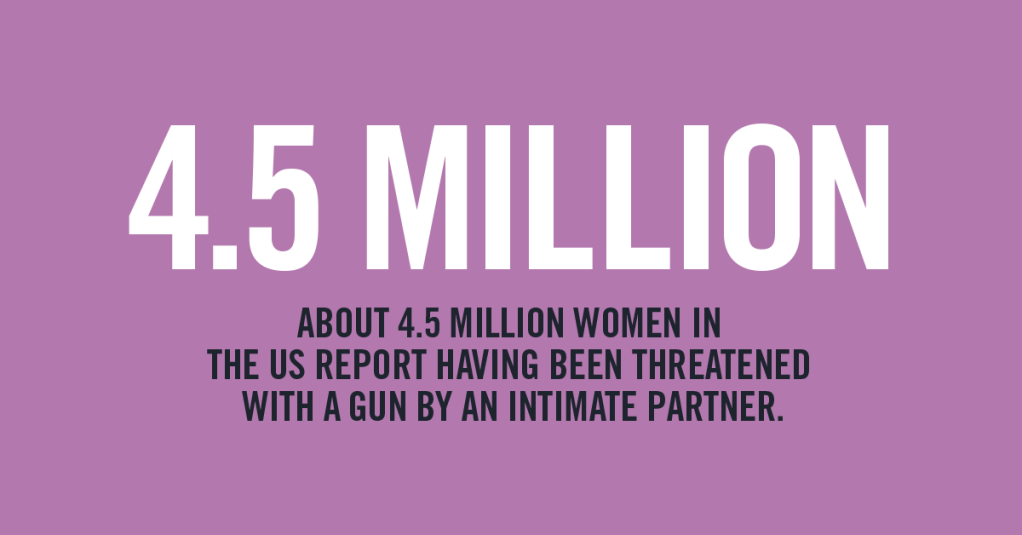
I will be honest, I have no experience with abusive relationships. Instead of trying to make up something witty or smart to say about abusive relationships, I am going to state the facts. These can be also be found on the National Domestic Violence Hotline Website. Just to warn you, these statistics are shocking.

  • 12 million men and women in the course of a year will be victims to abuse
  • 3 in 10 women and 1 in 10 men have experienced partner violence
  • 15% of women and 4% of men have been injured by abuse
  • Females 18-34 experience the greatest amounts of abuse
  • Many victims have the same offender every time.
  • 1 in 5 women and 1 in 71 men have been raped in their lifetime
  • 1 in 6 women and 1 in 19 men have experienced stalking in their lifetime
  • This information was taken from the National Domestic Violence Hotline

About Me

This blog is for a Political Action Project at Brigham Young University. The purpose of this blog is to educate individuals about good and bad relationships. In addition, this blog is to help others be aware of resources out there to assist anyone in a harmful relationship.

Now that you know why I created this blog, here is a little about me. First off, a caveat. I am no writer. I am no relationship expert. I am not an MFT or LCSW and I do not have a PhD. In fact, I am an undergraduate student at Brigham Young University studying Family Services. You might be thinking–wow, this girl has no credibility–and you are incredibly accurate many ways. However, the key to being a good social worker (my future career goal) is to know what resources you have at your fingertips, and how to disperse them to the community. Sure, I have taken classes on family stresses, diverse families, sex within a couple, complex theories to explain families, family processes, and more. This knowledge is valuable, but more important is how this knowledge is used. And that is why I am here, writing to you. I am guessing that that is why you are here too, reading this. In the following pages of this blog, you will encounter suggestions from experts on married relationships, dating relationships, abusive relationships, or distant relationships. You will experience other’s stories and how they strengthened their relationship, including mine. I hope that you write to me so I can include your story as well.

About Me:

undefined

That is me, Rachell being kissed by the best guy in the world, Chad. We got married in Idaho in August 2018 and life has been AMAZING together, but not easy. We are both seniors in our undergraduate programs and have been blessed by the education we have received. I grew up with the great relationship role models of my parents and grandparents, all of whom are still married today. Through their stories and examples I have learned what to do, and many things not to do, to make a relationship run smoothly. I hope that I can share some of that knowledge with readers of this blog.

Design a site like this with WordPress.com
Get started